weclome vistior

welcome to the home of Oronegro, a land that not so long ago was a peaceful and prosperous place but by the mid 2020's it was engulfed in a violent civil war! The whole world watched doing their bit in the conflict. the story is one of a small country stuck in superpower politics
Showing posts with label La Esperanza. Show all posts

Friday, January 11, 2013

Colonisation and expansion part3

In this the final part of the Colonisation and expansion tale of early Oronegro we focus on the final acts of Oronegro before the year 1730... a time of consolidation but also great threat, old friends become foes and old foes rear their heads once more. It was a time where Oronegro once more decided to show herself the equal of any great power and also shock the world with her bold and sometimes brutal actions. the 17th century may have been a relative time of peace for Oronegro but the 18th could see war and death on a scale that may surprise those who do not expect much from such a small place.

below is a map printed in 1758 of the west of Oronegro as it was in those days... although the lands actually extended far to the east almost to the boarders of Oronegro in the year 2000. however this was the heart of the nation and its life blood. there is no scale see caption for details.
as with most maps of Oronegro there is no scale because Oronegro is a very large place and it would threaten many in this earth to see how big it really is, HOWEVER if you take the width of the Oronegro's river mouth at La Tierra del diablo to be around 0.5 km you will have a reasonable scale.
1690 was a tense year in Oronegro with the Nine Year's War or the War of the Grand Alliance being fought in Europe and all the different Colonies around the world, it seemed certain Oronegro would have to side itself with one of the combatants or face possible invasion from any or all of the nations involved.
But taking sides was against one of Oronegro's founding principals: To be neutral to all sides so long as both sides could claim to be the homeland of many Oronegreans. This mean Oronegro could not take sides as France could claim to be the homeland distant or otherwise of almost 26% of Oronegreans, and on the other side Britain claimed 24% and Spain 37% with many of the other European combatants claiming around 42% of the population. This was a problem However Oronegro had one trick up its sleeve. For deep in One of Germany's parallel lands was that small state where long ago in the 16th century Lord Wolf the rightful ruled with his Oronegrean wife. Eliza daughter of Juan Carlos founder of Oronegro and the first of the many powerful Mayors of Oronegro.
By now the little German state was a small insignificant principality pushed about by its neighbours, Yet it was a state and one which Mayor Samuel Jose the former general now declared Oronegro's whole and secure Ally.
It was strange first of all as a mayor you needed to be part of the family of Juan Carlos, Samuel barely qualified and as such was not seen as a legitimate leader... also it was the democratically elected Prime Ministers Job to run the state and deal with foreign affairs.
However Mayor Samuel was although only just a distant relation to Juan Carlos and as such could qualify for Mayor, also despite being democratic Oronegro was practically a constitutional monarchy and as Mayor Samuel could make these decisions, though there was no rule that anyone had to do them.
The Principalities current crown Prince was Michael von Oronegro. the Title Von Oronegro had been retained  ever since Eliza had been at the families head. Michael had little care for his families history the war in the Germany of this world made the principality the target of many of its neighbours in their smallish parallel world. They were for some reason allied to France seeing a chance perhaps to extend their power beyond the valley that made up the land into the rest of Germany beyond the tunnel of trees to the north and the cave below the mountain waterfall to the south. Prince Michael and the Principality looked doomed. Then came the news from across aurora covered sea! HELP WAS COMING!!! a Whole legion of Oronegro's finniest and many thousands more of the Reservist was coming to his aid.
To Britain, Spain and the other members of the Grand Alliance this was Oronegro's show of allegiance to them. To France and her allies Oronegro was just helping a small friend with little connection the war. This was due to some skillful words and clever actions made by Oronegrean diplomats and the Military.
in march 1691 the army Landed in Northern Germany and began its long march to the tunnel of Trees, it passed many lands inspiring awe as it passed. None hindered it all watched it. River boats were accompanying them up the rivers to where the river from the hidden valley emerged. it took them several weeks to get there but when they passed under the massive wide tunnel made by the branches of trees larger than any the soldiers had ever seen they entered a place that could not physically fit on any map of this world, Just like Oronegro.
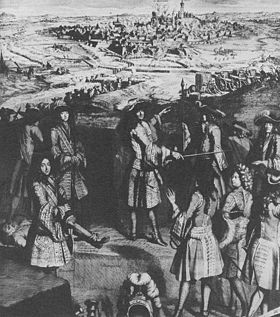
the siege of Kaltburg the principalities capital in 1690-1691
The vanguard emerged from the tunnel as ink from a pen writing the tale of a war that even the great powers would never had predicted! crested helmets wear the first to appear signifying that these men were of el ejército primero. However this blue mass of infantry was followed by cavalry, cuirassiers, dragoons and a mixture of other horsemen, behind them was the centuries of grenadiers and fanned out around them were the cazadores. Suddenly behind the blue came the red after the cannons and artillery came the red-coats and tricorns of the thousands of reservists members of the el ejército segundo. Like a river flowing in the opposite to the one on their left they marched into the valley, although they passed through hostile territory at the tunnels mouth, none came to oppose them, they reached Sattel a small town known for its horses. Here under the midday sun many men from the great farming plane broke from the marching column and leaped onto their new, somewhat startled mounts. There was only a token of resistance a few shot from the window of the town hall, which was answered with a laugh from the soldiers surrounding the building, this brought the ashamed defenders and councilors out with their heads hung and their pride gone. 
The Army camped there that night hoping to draw out some foes. With no loss of life they had taken and now secured a position, in which an estimated 9300 Oronegreans now slept. sentries watched through the night as a few of their comrades went back and forth between town and the woods bringing lumber for constructing defences in the narrow streets. every entrance to the town was blocked with a barricade, this included the back doors of all the houses on the outskirts, every house facing the fields around the town and those looking out over the river that ran through it had their windows turned into gun slits boarded up to allow  defenders to shoot out unseen.
The next morning on the 21st of June 1691 saw an army of Grasdamm close in on the small town, whose population had more than doubled the previous day. they walked up to the houses not noticing anything out of the ordinary until the first shots rang out, to late they noticed the strange shutters with vertical and horizontal slits. the first ranks fell back to regroup but now the second and third wave charged the houses from where the fire came. they found the doors almost impossible to break down and by the town they were in the defenders were gone. those who ran through the streets had to fight for every meter, every house hid soldiers each corner hid a barricade, each time they broke down a door defenders ran along rooftops and through hidden passage ways to get to the next building.
fighting in the centre of Sattel, the funneled army of Baron Franke von Grasdamm. found it a cauldron of death
It all came to a head in the afternoon then the army of Baron Franke von Grasdamm entered the Plaza. the sound of gunfire was still prevalent in the smaller streets of Sattel but the roof runners and the passages that the small Grasdamm army found lead to that place. they entered not expecting much there was a small wall that blocked off one half of the square, however apart from that there was nothing there. Suddenly the doors around them exploded the cannons of the Oronegrean artillery were hidden on the ground floor of the towns large central buildings then from above came more gunfire and on the other side of the wall they could see soldiers emerging from the town hall.

by 5pm it was all over the Barons army was cut off as the defenders who had hidden in basements  and attics emerged blocking off the ways in and out of Sattel. the men of Grasdamm surrendered immediately and the Baron after he was found hiding in the bathroom of a baker negotiated peace with Oronegro. With Grasdamm out the way and the river free from foes up to the grassy dam of Grasdamm the river ships joined the army in the valley and after being raised up the river they sailed across the lake behind and began to support the crown prince. he had been besieged Kaltburg for a year now and was totally surprised by the appearance of Oronegrean boats and soldiers, he had expected monetary aid but not physical military support. By 1692 the war in the valley was over and the principality of Kaltburg was now dominant in that region. the Oronegrean army sailed home leaving some military advisers and specialists behind but also taking home many willing settlers and lots of loot.

This was the first of many actions Oronegro would be involved in all over the world as she showed off her somewhat oversizes military muscles. However their actions made some enemies closer to home many of the smaller European colonies along the coast from Oronegro declared war and invaded seeing what they thought of as Oronegrean aggression towards France. some even thought that Oronegro had showed Britain and Spain disrespect. By 1695 Oronegro was at war with 5 neighboring states; these were Oroblanco, Playalargo, Costaplata, New Dunedin and
nouveau Paris.
Oroblanco was the first to fall its capital La Fortuna was taken on the 21st April 1695 after a war only lasting 3 days. the small nation was attacked solely by a cavalry force, before its small infantry force could form up for a battle it wound all its undefended villages raided and empty. They surrendered on the third day as rumours of a large infantry force approaching and the devastation wrought by the cavalry was too much for the council of La Fortuna to take.
Playalargo was on the coastline  between La Ley and La Esperanza, it was based in the small port of Costa Buena. Playalargo had long lived in peace with Oronegro, allowing Oronegrean armies to pass through quite often so long as a large fee was payed, however now they declared Oronegro an enemy of Spain! They claimed although Oronegro had fought against some allies of France this had been done in their own interests and not as a show of allegiance to Spain, they also cited Oronegro's quick return home and lack of action on the main fronts as a sign of her contempt for the Spanish king. Playalargo fought for many years and it was 1697 before Costa buena was assaulted and held  by Oronegrean marines before the army of Mayor Samuel arrived to secure the claim.
Costa Plata was based on the Isla del fuego, the island ships first past after crossing the aurora, it was invaded in 1694 but total control was not established until 1697. the capital El puerto grande was taken without a fight in 1695 to the great surprise of its citizens. The famed silver reserves on the island brought more wealth to Oronegro and its new 68,000 settlers brought more man-power to the state.
New Dunedin which was mainly settled by Scots was based to the north of the La Esperanza river mouth and asked for peace in 1698 after marines attacked its capital in June of that year. Nouveau Paris also asked for terms but as it was further around the great Oronegrean bay it was not invaded and as such its power remained stronger. The final peace was established in 1700 as the final guerrillas emerged from the jungle and the last of the riots were quelled. Oronegro enjoyed a brief respite but its wars had not pleased any of its larger mother countries and they began in secret to arm some of Oronegro's most powerful foe's as well as those who it had just established peace with.
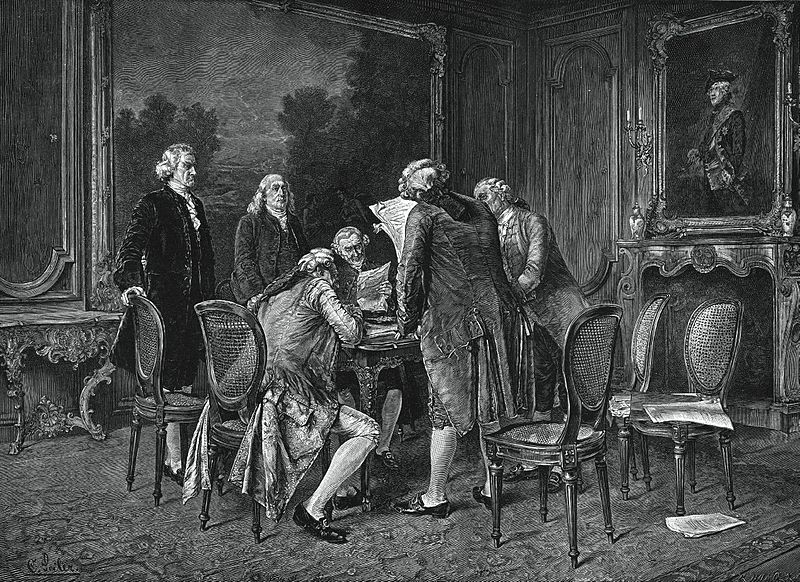
the signing of the peace treaty of Costabuena in 1698 that meant Nouveau Paris would end the 6 year war it had with Oronegro during which it had not been invaded and only briefly cut off form France.
The start of the 18th century was brought in with great fireworks in La Ley, La Esperanza and smaller celebrations all over Oronegro. Oronegro had proved itself a powerful nation and one that even the large superpowers had to take into account! the next 20 years past with little incident although there was war in Europe and else where this only helped Oronegro grow as refugees added to the already large population. It was a boom time in Oronegro as traders exploited their new found wealth and Pirates were kept at bay by the increasingly well trained Oronegrean navy. By 1720 there were 1,365,218 people in Oronegro according to the census of that year, with a possible margin or error of + or - 300 people. Oronegro became a powerhouse of innervation as well as strange devices appeared and usually disappeared in the streets of the capital. there was steam powered elevator type thing built in Oronegro's port in 1719 though it proved unreliable and noisy and so was removed. Canals were planned and roads improved, there was an influx of Muslim settlers also in 1713 which brought the camel to Oronegro in sufficient numbers to warrant a camel farm in the arid valley of el Minero.

Things seemed to be going well until 1725 when Oronegro was once again attacked by pirates like those 100 years before this time the raid was much more effective and La Ley was almost totally lost many soldiers, marines and civilians were lost and once more the saving factor came from La Esperanza... this was just the beginning Kaxad was rising the land of Oronegro was going to go once more through a time of terror and pain as its neighbors, old foes and pirates all decided to attack in succession and at some times in unison.

The time of Colonisation and expansion was over now it was the time of War and conquest!!!


Monday, December 31, 2012

colonisation and expansion part2

in the previous instalment we focused on the beginning of part2. Part 2 focuses on the maturing of Oronegro into a nation and so now in section B we discover how Oronegro turned from a battered nation into a secure and strong nation with its own distinct laws and customs.

in 1625 the Pirate Raid shocked Oronegro into action, her navy was expanded and her marine forces were improved to face off any other potential invaders. the story of the Military power of Oronegro entered its second chapter Oronegro created 2 land forces, of massive size. the first was tiny, called el ejército primero it consisted of 2 legions (1000 men each) and a few cohorts each of which have 500 men. The soldiers in these forces were some of the best trained forces for their day in the whole world. the second force was el ejército segundo, it consisted of what today would be considered reservists, they came from the general populace but attended regular training and arming exercises, they made up around 5% of Oronegro's total population in 1650 and that only ever increased until in 1700 it was 20% where it remained stable more or less until the system was abolished in 1894. More on these forces will be explained also in other texts that will come later on.

The navy was also altered in a way. more larger ships were built and in 1659 what would later be considered a first rate ship of the line was built. the Juan Carlos was a massive ship that only just managed to fit into the harbour at La Ley. it was crude and was dismantled and rebuilt several times until in 1723 it took the form that most first rate ships of the line had. the name Juan Carlos was always used on Oronegro's largest ship and if Oronegro ever acquired or built a larger vessel the name would be transferred unto it no matter if the other ship was still in active service. the Navy also started to recruit more marines, who were the envy of many other nations except those of the great naval powers or France and Britain.
a painting of the Juan Carlos made in 1754
However although the mid 17th century saw the great explosion in the military and naval power of Oronegro it also saw the explosion in her population. in 1625 Oronegro had a population of 193,000 people however by 1700 it had exploded to well over 1 million... Why? Gold. in the early years of Oronegro the conquistadors and settlers found no gold. none at all. however in 1634 an expedition into the mountains south of Oronegro entered a wide plain in the somewhat arid terrain, here they found gold, lots and lots of gold. Due to Oronegro's neutrality towards the conflicts between, Spain, France and Britain, hundreds of settlers from all these nations descended upon the small nation almost immediately after the news spread. thousands would descend on Oronegro to get rich in a spectacle similar to that of the 19th century gold rushes, this was because Although Oronegro did control the mining and minting of gold and silver, any miner could keep 20% of his or her find so long as they complied with the laws surrounding mineral extraction, these included not mining or panning in another miners area, not damaging the land scape, not taking land from natives and not breaking the other laws of the land. Of coarse these laws were easy to in force when you have so many reservists who themselves quite often were miners by day and were always more than happy to make sure that all Oronegrean miners were not exploited by the new comers. many settlers came for gold or for turning it into products of great beauty. the town of el Minero was the main consequence of this influx. it was during this time that Oronegro first started to become estranged from Spain as Oronegro's gold did not end up on the treasure gallions but on all types of vessels from all over the world. the Gold rush died down in the 1670's as people lost interest in the stories, though there was still plenty of gold and silver to be found.
the mine shafts in the valley of el minero were some of the most well constructed anywhere, to comply with strict safety regulations

However it was during this period that another group of settlers descended in vast numbers into Oronegro.... Germans, with the Thirty years war raging fiercely in Europe many German catholics and protestants who found their homes on the front lines fled not to safer areas where their religion was prominent but to Oronegro. Oronegro's parliament of 1649 even considered officially adding some German kingdoms and duchies to its list of Official allies by settlers decent. the Next mass influx of migrant was during the English Civil war, this had the effect of consolidating Britain's presence in the nation and also meant that the age old tolerance of other religions was threatened.
Oronegro had always been tolerant however these new arrivals were divided, though many were not overly zealous there was certainly division between them. Something had to be done, the answer was education and health care...
as war rages in Europe Oronegro grows rapidly
Health care and education were well established in Oronegro, they were part and parcel of the democratic system of Government. sure there were some very rich people in Oronegro but poverty was something that was always addressed. La Ley had many schools for the young. both men and women were treated and educated equally, though the Arab/ Muslim population always had a few issues with this. However although there were hospitals the governments action was not for curing the sick but for preventing illness. Sewers were expanded to cover the whole city and areas outside for the predicted growth, Pumps were set up everywhere supplying clean water, aqueducts were built and the cities streets were paved. it made La Ley one of the cleanest cities around and one that was the envy of many a large nation. La Esperanza also was improved in the same way. but both cities were also transformed in other ways, there was a new group established,made up of reservists, firefighters! Fire was always a problem in cities like La Ley where in the hot summer days could cause wooden frames to become matchsticks. the Firefighters and the Police forces were to become some of the saving factors for Oronegro's religious harmony. they kept everyone safe and with safety comes happiness. The next step in tackling religious division was education. All Oronegrean schools were run by the state, every teacher was well paid and taught the same curriculum, this included, reading, writing, history, science, practical skills (suck as wood carving or sewing), physical education, military education (non compulsory for girls), social sciences, languages and religious education. The purpose of this system was to allow all Oronegreans to work how they wanted and where they wanted, in an environment that would not cause them to be at a disadvantage due to their religion, race or sex.
The punishment for religious, racial or sexual crimes became harsher also, although there still were some crimes committed, the punishment of death for killing someone because of their religion as opposed to a long prison sentence and then hard labour before release helped to get the message across that Oronegro was not about to let religion get in the way of running a nation.
hanging became the common punishment for those who killed a fellow man because he believed something different
But for all Oronegro's best efforts religious tensions did result in conflict. in La Ley in 1661 the Muslim community came under attack from gangs of catholics because of the apparent mistreatment of catholic women working in Muslim shops. the fighting was put down by the police but troops had to be called in to make sure that fighting did not start up again. However soon Oronegro would have other problems to face instead of religious divisions.

What the Native tribes did during the early 17th century in Oronegro is relatively unknown however some must have grown in strength.  the Kaxad empire grew in strength and cohesion after their long lull due to their defeat at the hands of Oronegrean forces in the previous century the valleys leading to their home were explored and secured by Oronegrean soldiers and military settlers, the towns of La Palma and San Juan were founded in this way. But it was the tribes in the valley of the cat that caused the most problems. they declared war on Oronegro in 1678 for what reason no-one knows but they would soon regret the act. A legion under the command of Samuel Jose was sent to clear the valley. The only way to reach the valley was usually through the Kaxad plain, however Samuel decided to cut a new one, through the mountains north west of La Ley. his regulars were of the all well acquainted with road building and an all weather military road across the mountain passes was established within 3 months. The Tribes feared their destruction and began to head for their sacred home in the tall mountain range in the far north of the region. However Samuel decided to make an example of this conflict. he carried on the road even though there were already trails in the valley, in fact he buried the river in a long large sewer and fresh water system! every few Kilometers he built some small watchtowers and every days march distance a secure fortified complex of houses was built, at the same time the reservists were pulled into action thousands upon thousands joined the army. a large wall was built at the point where the valley of the cats entered the Kaxad plain it was manned by reservists and volunteer militia. the advance of the army of Samuel Jose was slow due to the construction however it was unstoppable all ambushes were either found and destroyed or beaten back. by the time Samuel reached the town later called el gato, his forces had swelled to over 15,000 drawn by the opportunities of wealth and land. by the time he had reached the base of the mountains where the tribes took refuge 2 years had passed, the river that once flowed through that valley had been all but covered and turned into a water supply for all the fortified houses and the small towns along the route.
Now came the hard part getting up the mountain side. for this he built a massive zig-zag up the hill the road was wide enough for many carts to pass and at each end of the rise there was a large battery in place to cover the construction crews... All the tribes could do was watch and wait as the monstrous worm or road made its way up the slope, all their best attempts of stopping the army failed and they were worried about the coming of winter which at that altitude brought snow! However now it seemed that the army of Samuel Jose would reach them before the winter of 1681...
a drawing of Samuel commanding the battery aiming down at a very fanciful drawing of the fortified city of the tribes... this is in fact highly inaccurate as there was no ground that much higher than the castle and the mountain sides were much closer than the drawing shows them to be

on the 12th of June 1681 Samuel Jose and his cuirassiers reached the level top of the mountains the air was thin but the tension in the air was suffocating. for over 3 years now he had led an army all the way up one of the most obscure places known, building one of the most over the top and complex systems of roads around, he had covered rivers and carved hills into plains paved a road longer than the distance between London and Dover. All this work, all this effort and all the expense had been done for this moment, the moment when he would conquer the fortress on top of the mountain. its defenders hid behind the walls, their muskets and bows ready to draw Oronegrean blood. 
Samuel brought his infantry up to the hill top, then the artillery and finally the thousands of reservists and militia he never really commanded. Now assembled on the plain on top of the mountain their uniforms were like a red and blue sea that turned that place into a parade of death.
At precisely 12 p.m the cannons of Samuel's army opened fire upon the wooden castle, it lasted for 3 days and 3 nights. and on the morning of the 15th of June the infantry of the Legion that started the long march to the place so many years ago stormed the broken walls killing all its defenders, the fighting for the huge castle lasted for a week but when it was done the war was over and the Oronegrean flag flew on the mountain top!
It was September when Samuel Returned to La Esperanza and then to La Ley. in the Capital he was greeted by large crowds he was hailed as a national Hero and his name would forever go down as the man who conquered a nation only to establish a permanent peace. the mountain top the Tribes once hid in was flattened and a new Stone castle built. El Castillo as it became known was the grandest and largest fortification built in Oronegro and for that matter it was also one of the largest built since the middle ages. Oronegro was now secure and it had matured as a nation. nothing could stop it now... could it?

in the final instalment we look at the early 18th century and the start of some political moves that will affect Oronegro in a major way and some wars that you may not have thought involved them.

Friday, November 23, 2012

colonisation and expansion part2

in the previous installment of Colonisation and expansion we looked at the early days of Oronegro and how "los Desperados" set up a colony of equality and peace, separate but not free from Spain and her kings and queens. in this installment the time of the securing of the colony and the foundation in the 16th and early 17th centuries comes into focus. Also a key story comes into focus at this time the tale the children of Oronegro's founder Juan Carlos.

Colonisation and expansion part2 section A

the Year 1523 will always be known as the year of passing for the colony! Though not yet known as Oronegro the colonials came together united and mourned the death of the founder of the land. For on the 3rd of March 1523 Juan Carlos de Costa y Andalucia passed away at the age of 67 he was survived by his 8 children, of whom those born in Oronegro had names from the different nationalities that made up the colony.
  • His eldest son Juan Carlos Segundo born on the first day of April 1479 inherited the farm they owned near El Pueblo Antiguo south west of La Ley.  He would in 1555 declare the state of Oronegro he was 76 at the time he lived 7 more years until he died age 83 in 1562. he had 2 sons
  • His eldest daughter Maria born 1483 was the last child he had before coming to Oronegro.  She went onto become something of a free spirit never marrying and becoming an author of great renown her books on Murders and romances were to become all time favourites for the people of Oronegro for hundreds of year to come. she died in 1591 at the astonishing age of 108 she had no legitimate children but rumours persist that a love affair with a noble gentlemen from France ended in the birth of a son and two daughters.
 Then came the twin brothers who were his first children born in Oronegro they born in 1496
  •  Alberto named after the Italian merchant who brought his hometown to the colony. Alberto married the daughter of the merchant and inherited the business. he grew wealthy and powerful and sailed many times to Europe. visiting his sister in Germany multiple times. he played a critical role in supplying the Prince and his troops in their struggle for his rightful crown. when the prince regained his crown in 1534 the 36 year old Alberto was knighted by Lord Wolf the Rightful for his services to the crown. Alberto died in 1548 age 52 a wealthy man and his sons were to become some of Oronegro's most powerful traders
  • Pierre named after the french expedition leader. he was a very sensible man, he married and had a child however this was overshadowed by his work in Forming the Oronegrean Navy. he set up many shipyards in La Ley, made the ports more efficient and with some of his brothers money he helped the Italians build La Ley's central quarter on the Island. he died after his brother in 1551 leaving his son a house boat that was almost as grand as the large townhouses in La Ley.
the remaining 4 children were
  1. Then there was Elizabeth born in a warm sunny day in 1500 was named after the wife of the English merchant who brought his native town to the Colony. She lived most of her life in the family house somewhat of a recluse. Her farther worried that she may never leave the home started looking for a possible husband. she married, against her will in 1513 to the young explorer Ben of La Ley who was the son of the same English merchant whose wife she was named after. Ben took her out of her comfort zone time and time again as he went exploring the jungle near La Ley... in safe territory of coarse. they both died together of natural causes in 1561.
  2. Juan's most notable child Emir Born on a stormy night in 1502 named after the Moorish captain who brought the first Arab settlers to the Colony. Emir Became the first man in Oronegro to take part in a Native canoe race which he won, receiving the respect of the Nakwaztec tribe. He also became the first man to organise the Conquistadors and old soldiers into Oronegro's first army, though not very well made he based it off the roman system, his command and division structure would remain nearly the same until the present day. he died in 1553 in a hunting accident.
  3. Taxtecohi born in 1504 named after the chief of the Mehobeck tribe which the colonists first encountered. He married the chiefs daughter in 1526, she was 14 at the time. in 1534 he fought the chiefs son for the leadership, he won the duel and was popularly proclaimed chief. he ruled happily until his death in 1558.
  4. Eliza born in 1510 was Juan's last child. Named after the Jewish woman who had helped Juan find and aid as many Jews forced underground in Spain. Eliza married an exiled German prince in 1523 aged only 13 her father saw her get married in the original church in La Ley a few days later he passed away. Eliza lived a great life and enjoying the wealth her husband brought from his homeland. they even went to Germany with an escort to fight for the princes crown. and in 1533 her husband regained his families lands from their foes and was proclaimed Lord Wolf the Rightful. she died in in Germany with many children in 1593 age 83 a German aristocrat. 
an Oronegrean ship enters port in Germany ready to aid the prince in his fight for his crown

Colonial tension 1555-1625

La Ley was the Capital of the new Land of Oronegro but still there were problems. La Ley was being rebuilt in in brick and tile. the Island on the southern bank of the Oronegro river was built in the Italian Renaissance style. very beautiful it was a great tourist attraction bringing many native tribesmen into the city to marvel at the incredible architecture and the twisting turning streets. However there were problems as a land where nearly all nationalities could live in peace La Ley found itself the target of Pirate raiders. These raiders knew that the port was harbouring the trade ships of their homelands enemies. Spanish privateers attacked the English ships in harbour, the English Buccaneers the Spanish all depending on the political situation. La Ley could not defend itself its navy although already organised by the Noble Pierre Carlos de Costa y Pizarro. The shipyards were mostly turning out merchant ships for Alberto y Maria Oronegro's largest trading company. all that was available were boats of the line and a couple of old Carracks.
So in 1561 the Mayor of La Ley Juan Carlos Trecero ordered that La Castillo de La Ley be built. it Incorporated 2 fortifications a Wall around the old district, the southern part of La Ley on the island, and a fort on another island at the narrowest point of the Oronegro river before the city. the fort was rebuilt many times and was the site of many important battles. it was finally made into an imposing star fort in 1613 one of the strongest fortifications at the time it would become the heart of a great battle in 1625.
the mayors palace for La Ley was in the town of Pueblo antiguo, a fine building it was beloved of the Oronegrean people

However during the 1550's and 1560's Oronegro was at peace Coco beans were grown in plantations on the jungles edge and the great planes to the west of La Ley began to be cultivated as the tribes slowly lost their power due to disease or joined the Colonials in alliance. the reason for the tribes willingness to ally themselves would not become known until the 1580's. Oronegro was little bothered by pirates during this period also a few raids brought the fleet in La Ley to its knees the Army was strong enough to stop them plundering the city and after the wall was built around the old district in 1561 the cities banks and government buildings were safe. though the port and the Muslim and Jewish quarters were still raided the British in their quarter nearby would respond with their guards quickly enough to prevent any serious damage.
meanwhile in La Esperanza peace was constant the valley in which the city was based was fertile and crops were grown, an irrigation network aided the growth of many other crops and cattle and sheep could be reared in peace and security. the tribes around La Esperanza were not as eager to ally as those around La Ley but after the wave of disease had swept though them and gone they began to seek help from the white men. Friendships were built and the catholic priests began to convert the local population, another difference in the practices around La Ley, With La Esperanza far up river and it's navy already set up it was too far and too strong for most pirates and those who were powerful enough were not able to bring their large ships up the river... only Boats of the line could fit up the river.
During this time a few explorers ventured up the Oronegro river, not too far the city of Santiago de Oronegro became the furthest port of call for the time being the large island of El Pollo was also settled by farmers who used rafts to get from the defensible island too the farming fields. which although not attacked so far, were left unsettled, this was because the local tribes who gave land warned that there was a power in the hills and jungle behind the plane. still the land was at peace and farmers, traders, explorers and woodsmen all went up the river in search of new land and new opportunities.
During this period Oronegro's population boomed from 9,500 people to 33,500 people mostly from overseas but also because of the good sewer and water systems in La Ley and La Esperanza which prevented outbreaks of serious illness. Also with all the new settlers came more soldiers and sailors who were able to defend the outlying territories and increase the trade between Oronegro and the rest of the world. Oronegro was becoming known for peace, health, happiness and opportunities.

the 1570's were the beginning of the wars that would secure European control over the lower Oronegro river valley. the Warnings of tribes came true as out of the forests marched the armies of the Kaxad an empire that would threaten Oronegro more than any pirate fleet or terrible storm could. the Kaxad empire was a powerful nation based in a large valley that would one day be the place where El Granproyecto would be established. the Kaxad had suffered from the wave of disease that came with the arrival of Europeans but they had benefited also! Kaxad city had been terribly overcrowded the people were seriously unhappy the plagues that had come had killed off the people in the cities slums making it a more secure place. Now with the empire in possession of a few gunpowder weapons since sending a few spies and traders to acquire knowledge about the settlers and gain some of their technology. The empire secure and armed was now ready to make its presence felt they marched down the selva river valley and came out into the plane to the horror of the settlers and native tribesmen alike. the town of San Antonio was leveled the island of El Pollo was isolated the City of Santiago de Oronegro was besieged. the Oronegro river was the only was that La Ley could supply the towns. La Ley was attacked the Port and the surrounding districts were taken and the old district and its walls were the only safe haven. La Esperanza was also attacked, Kaxad troops marched over the mountains that separated the valleys. La Esperanza had a palisade around the whole city and with the loyal tribes all rushing in to defend the city it held out far better than La Ley.
The sieges were not well implemented and the Kaxad troops often went away for festivals in their capital, what troops remained were well trained but too few to keep the Oronegreans inside the cities. La Ley was was fully recovered in 1575 after a year of partial occupation while La Esperanza was too strong for the besieging forces to attack and in 1576 they retreated back over the mountains. Santiago de Oronegro was still surrounded and the Oronegrean boats of the line were the only things stopping Kaxad troops from taking the city from the river. El Pollo was unassailable with the bridges destroyed and the Kaxad boats were no match for the Oronegrean warboats that came up from La Ley. The sieges lasted until 1583 when the troops were all withdrawn for no apparent reason.
the view across from el Pollo looking at the palm covered river bank.

The Colonists rebuilt their towns and improved their fortifications more effort was put into exploring south of the Oronegro river and a series of watchtowers and outposts was set up along the jungle edge. however in 1590 the Kaxad troops returned but now the Oronegreans were ready their armies formed up upon the planes and at the battle of Selva y Campo the Oronegrean army under the command of Centurions Ray and Fran set up with 600 men in front of the small town of San Paulo. facing them were 30,000 Kaxad soldiers armed with bows axes and primitive, crude swords made by Kaxad blacksmiths who had just discovered the art of forging metal from the towns taken during the last assault. the Battle lasted the whole day 5 times the Kaxad troops assaulted the Oronegreans 5 times they were sent back under a hail of lead. finally the Kaxad army retreated. 231 Oronegreans had died but  over 21,000 Kaxad men never returned to their wives. For this San Paulo was renamed San Ray and Fran who later fought in the south of Oronegro outside the town of San Diego had the town renamed in his honor. So were San Ray and San Fran created, they would become very important later on but for now they were just relieved to have survived the invasion.
The Kaxad were battered but not broken and their armies marched over the great farming plains for years to come it was not until after the war had seen many incredible victories and crushing defeats on both sides that in 1603 the imperial troops withdrew. Losses on both sides could only be guessed at Oronegro loosed between 3000-5000 people while the empire lost around 86,000-87,000 warriors. The Empire was crushed it would never again hold the power it did then. their capital city fell into decline and instead the Kaxad people left the large city and built a few towns in the jungle... the empire was weakened but the towns were still loyal to the emperor even though they lived far away from him.
the fate of the Kaxad empire was to become a series of Jungle villages loosely controlled from the inpierial capital

the great Pirate raid of 1625.

after the Kaxad empire had withdrawn the land of Oronegro was slow to recover, they feared another attack was imminent. However in 1625 La Ley was once again threatened the Pirate Captain Samuel the Black heated came down from the Caribbean with 32 ships and 2800 pirates. He had heard that the land was weak and the Banks of Oronegro were without guards. they sailed past la tierra del diablo and up the Oronegro river. they reached the starfort and 1200 pirates disembarked to assault the fort while the rest of the fleet carried on up river. The Pirates headed for the seemingly unguarded walls only to find that when they were 100 meters away that hundreds of helmets and muskets appeared over the parapet. cannons from the ships fired at the fort and the forts own guns responded in kind. the rest of the pirate fleet carried on towards the port bombarding the old district along the way. Then the La Ley fleet mostly made up of 3rd rate and 2nd rate boats of the line went against the pirates sloops and brigs the battle was fierce many ships were lost and the river was not wide enough for either side to utilise their numbers or their maneuverability. the Starfort was being heavily bombarded but the defenders did not waver, instead they fired back twice as fast. the battle lasted 5 days until the pirate fleet was surrounded when a fleet came down from La Esperanza to relieve the shattered city. the Pirates surrendered and their ships taken. the pirates were not executed but put straight to work only one was killed Samuel was ceremonially shot by the mayor of La Ley and then clubbed by the native tribesmen if the bullet did not kill him. Samuel has gone down in history of one of the most daring and brave pirates of his day, the only problem is that his name was hidden with Oronegro.
Oronegrean ship and marines looking across at the fort after the battle in 1625

And so this second installment comes to the end. In the next installment the 17th century is covered along with the discovery of Gold in Oronegro. the Story of Oronegro was now in motion.

Thursday, November 15, 2012

colonisation and expansion part1

in 1492 Columbus sailed the ocean blue... unaware that his ideas about the size of the world were completely wrong, leading to native Americans being known as Indians. However he was not the only one to set sail that year. Juan Carlos de Costa y Andalucia, he was from a group known as "Los desperados" (the desperate ones) they were made up of atheists, Jews and Muslims and other "heretics" who since the end of the riconquista had been hunted and prosecuted by the inquisition. Hoping that perhaps they could reach the east indies they set out after Columbus half expecting that they would have to donate him food once his supplies ran out, knowing that he had underestimated the size of the world. instead one night they travelled under an aurora in a tropical region, when dawn came the next day they passed by a large volcanic island but did not land assuming that it would be devoid of life so far out in the ocean, then they saw land and lots of it. they headed for wide river mouth that came into view before them, it was almost wide enough for the 13 ships to sale abreast however the 13th the one in which the old pagans and witches sailed in grounded itself on the spit, this land would become known as "la Tierra Del Diablo", because of the practices that went on there, and its wind swept nature.

the fleet sets out across the sea

of the remaining ships there were several groups
  • 3 carries Muslims from the south of Spain and Morocco, El Árabe, El moro and El Profeta
    Mahoma
  • 2 carried Jews escaping from persecution these were Israel and Solomon
  • 2 carried catholics who were unhappy with the churches policies in Spain, the ships were the El Jesús and the El San Martín
  • 3 for the atheists life away from Spain was becoming more and more inviting! their ships were La Ley which was the largest ship on which Juan sailed, El Pobre and El Futuro
  • 2 smaller ships carried christian soldiers and the sons of soldiers who had fought alongside the moors in Spain and now were being hunted down. these were El Mensaje and El Caballero
the ship that got grounded was La Fuerza.

then when they came to a great bend in the river behind the long spit they decided to set up a settlement. The ships then landed in several places on the western bank of the river the Catholic ships and one of the smaller ships landed on a large island. while the Jews atheists and Muslims all sailed behind another island to set up a camp on the mainland. From this day forth the city of La Ley was established. the catholics took apart their ships and built houses and a church on the island. this was the beginning of La Ley's old district. while in the mouth of a small tributary river the Muslims and Jews took apart their ships setting up a town that would become the major port of La Ley for many hundreds of years to come.

in between them was a large island they named La Isla Rica which would become a neutral meeting place where people of all religions, cultures and backgrounds could meet under the palm trees, it would remain that way until the 17th century when it was built upon by the wealthy, it would remain a place of wealth until the present day.
On the spit La Fuerza was torn to bits by the crew and its passengers, who had to use it all for setting up some houses as there was very few trees there. Fortunately riders from El Caballero which had landed on the island with the catholics had crossed the river and brought the people much building materials from the catholic ships which were surplus from the constructing of the Church. This moment forever made Oronegro a symbol of equality and tolerance, catholic and witch could talk together while Arab and Jew could live in peace.

A few ships were not dismantled, La Ley was the only real warship a grand Carrack and so it remained in case they were assaulted by the locals who had not been sighted and would not be for a few weeks to come, El Mensaje also was left, it was a fast ship and was crewed and with the plentiful supplies which were not even a quarter used up could be spared for a return journey of the craft! El Mensaje set out the next day passing under the aurora once again that night. when they reached Spain they found Columbus had returned and was being celebrated. This worked to their advantage, they went around in secret and gathered more people, mostly catholics who missed the priests who had gone. Also they ran into a British and Italian merchant who were willing to supply many ships in return for their own place in La Ley.

So the second fleet set out.
a drawing of one of the dhows that was part of the second fleet
the Italian merchant brought the whole of his native village... 137 people who went off in 3 ships. the British merchant went one better and brought his whole town with him, 517 people in 7 ships and not to mention a further 18 ships which came together from France, Spain, Morocco and Italy.  which brought the total amount of people setting out on the second voyage to 2147 people. lead by El Mensaje they set out on the 15th of November 1495 under the cover of darkness. it was called the expedition of Carracks and dhows due to the number of people coming from Morocco.  11 weeks later they arrived in the Colony. The Italians and some of the Spanish joined the others on the island while the people from Morocco went to the port. 3 of the ships that came carried soldiers who were set to work guarding the settlement. However many of the French and Spanish did not like the site and sailed off north to another river mouth. and after sailing inland for a day and a half they settled in a large plain between the hills. this was named after the only armed ship which was able to go up the river La Esperanza. so Oronegro's larger city was founded, and immediately they came in contact with some friendly locals who gifted them with the thing that could cause Oronegro to expand in years to come coco beans

In La Ley the natives had been trading with the settlers for the last few years at first they had been frightened by the strange men, and even more by the fact they spoke different languages to each other, they feared that these were several different tribes which might suddenly fight each other and destroy the forests and plains around them. But after the first month they came mimicking the language they had heard, to the great amusement of the settlers, it was not long before they were able to understand each other and when disease broke in the tribes the settlers helped as best they could to save them, with mixed results but still far better than what happened else where.
In fact the settlers managed to save hundreds, as many of the Muslims had a good understanding of medicine from studying in the great libraries in the Muslim world. this formed a bond between these first tribes and the settlers that would last until La Ley grew so large that the tribes were assimilated into the city.

In 1517 a third fleet from Spain of 15 ships brought the law of the King to the Colony, though shortly after another fleet of ships came from England to bring the law of the English monarch. So began Oronegro's story of Spanish and British co-history. the British decided then that Oronegro was not theirs though they had many settlers there, but Spain was unhappy when they colony said that the king could not control them through force and that he could only rule through advice... the Kings men agreed leaving behind 10 ships full of Conquistadors who were then joined by the British ships and the soldiers on them.
Oronegro would keep this type of hands off government by Spain until the mid 19th century which was the cause of Oronegro's war for Independence in the 1860's. So began the story of Oronegro and on the 15th of November 1555 the Nation was named as such as the Coco plantations of the Natives and settlers produced so much Coco that it replaced gold as currency in La Ley.

in the next installment of Colonisation and expansion we discuss the story of Oronegro in the 16th and early 17th centuries as it starts to establish itself as a strong, democratic power.