weclome vistior

welcome to the home of Oronegro, a land that not so long ago was a peaceful and prosperous place but by the mid 2020's it was engulfed in a violent civil war! The whole world watched doing their bit in the conflict. the story is one of a small country stuck in superpower politics
Showing posts with label Old Canon. Show all posts

Thursday, April 18, 2019

General Atena Minervista

Last time we discussed the illustrious Las Minervas the famed women of La Tierra del Diablo who, though not numerous made a significant mark on the military history of Oronegro. Today we shall look at one of Minerva's most famed daughters, Atena Minervista, who although she came from obscure origins was to rise to the highest ranks of the Oronegrean military.

Atena was one of the few women to gain the rank of general within the Oronegrean military
Atena was born into a poor artisan family, who, unable to support her gave her over to the priestesses of the goddess Minerva. Under the tutelage of the priestesses Atena demonstrated a particular propensity for classical history and excelled in all her areas of study. Upon her coming of age she, as with all girls presented to the temple, was submitted with the choice on how she would dedicate herself to Minerva henceforth. Much to the horror of the priestesses, who had expected her to take up a clerical role, Atena instead chose to take up the spear and join Las Minervistas. Although at first Atena struggled with the rigours of martial discipline, it was not long before she would demonstrate her skill.

Sgt. Atena directs the Samurai as they prepare to leave his castle.
It was on a mission to Japan, to secure the safe passage to Oronegro of a disgraced Samurai and his family that her tactical genius became apparent. The family and their attendants, escorted by Las Minervas were making their way down to the coast when they were ambushed by assassins. Atena, at the time a sergeant, noticed one of the mules head between two rocky outcrops and with quick thinking directed the party into the path. The winding track took them down to the shore where the boats awaited them. With only the loss of a few guards they were able to make their getaway.

It was at this point that their translator Jorge Zanja y Corriente revealed that he was not in fact a humble staff officer but in truth the head of Oronegro's refugee underground lifeline programme. Impressed Sgt. Atena's efforts he swore he would secure her a commission upon their safe return. So it was that at the age of 20 Atena became the Lt. Col. of the 1st cohort of the 21st regiment of foot Los Lobos (the wolves). It was with this unit that she had her first experience of large scale warfare while they served as mercenaries in Europe. During a siege she noticed some bandits harassing a mother with her children. Despite orders to remain in position she and a couple picked men rushed to the aid of the family chasing the bandits away and getting them to safety inside the town itself despite of risk of being attacked by the defenders. The town would surrender shortly after, with Lt. Col. Atena and the 21st Los Lobos ensuring that there was no looking or damage of civilian property.

Lt. Col. Atena personally intervenes to save the family even in the midst of battle.
 After service in Europe she would return to Oronegro, now with the rank of Colonel. More important was her reputation, not only for her skill in command but also her personal bravery as well as the concern she showed not only to her own troops but all those she came across. 

It was at this time that one of the native tribes allied to Oronegro was threatened by a large war host who were encroaching on their territory from the North. Colonel Atena's 21st Los Lobos, along with the 28th grenadiers San Francisco, and the 8th Las Minervas were dispached to assist the tribe. During the march through the jungle the army was ambushed, which lead to Col. Atena and one cohort being separated from the rest of the army. Extremely vulnerable to attack and with night spreading through the valley Col. Atena, with only the moon shining through the canopy to guide her was able to lead her soldiers back to the camp. The next day the army was to withdrawal to safer territory ceding ground to the warhost while reinforcements were brought in from La Ley.

The night march of the lost 200, was one of the defining moments of her career.
During the months that followed a full legion, was amassed to return to fight the warhost. During this time the expeditions commander an elderly man named Fernando died dysentery. Due to unusual circumstances the chain of command was unclear so it was decided that the next commander would be decided by the vote of all 5,500 soldiers present. Much to the surprise the gentlemen officers and to the press Atena Minervista won that election by a significant margin. With her commission endorsed by the head secretary of the army, one Jorge Zanja y Corriente, General Atena Minervista became the second woman to achieve that rank in Oronegrean history.

Here concludes her story, her deeds and achievements after this time will no doubt be recorded elsewhere.

Tuesday, April 2, 2019

Las Minervas, daughters of the goddess, a history.

"Lágrimas de plomo" - "tears of lead" 
The Motto of Las Minervas

In the history of Oronegro there's one unit who stands out above the rest, indeed they do so quite literally. The 8th regiment of line, Las Minervas, from La Tierra del Diablo was one of the first units to be formalised during the founding of Oronegro's standing army. As with all these early regiments they were recruited from and garrisoned in one of Oronegro's major settlements, in this case La Tierra del Diablo which contests with La Ley the honour of being the first settlement established in Oronegro. La Tierra del Diablo is unlike any other settlement in Oronegro founded by witches, heretics and pagans the settlement is home to a few mysteries and people whisper of unspeakable horrors that stalk the streets on dark and misty nights.

Las Minervas may be unusual in many ways but too often foes have mistaken their apparent novelty for incompetence a mistake they rarely get to make twice.
Such stories and the aversion to the religious beliefs and practises of La Tierra's inhabitants have been the source of much mistrust towards the settlement from Oronegro's other inhabitants. This mistrust is returned as it was known that the inquisition, ostensibly outlawed by the constitution was given free reign in many of Oronegro's cities. In this climate of mutual loathing and suspicion it should come as no surprise that when the time came for the formalisation of Oronegro's armed forces there were few volunteers from the militia of La Tierra del Diablo to establish a regiment. There was one exception however, the followers of Greco-Roman paganism, specifically those devoted to the goddess Minerva. According to the popular account it was an oracle who foretold how it would be the daughters of Minerva who would save the settlement in a time of great calamity. So it was that the daughters of La Tierra stood up and announced themselves as Oronegro's 8th regiment, Las Minervas, the daughters of Minerva.

Las Minervas occupied an odd position withing the Oronegrean military. On paper they were a line regiment, which normally would be composed of 1000 troops divided into two cohorts of 500 infantry, officers and other attached forces. Except Las Minervas never reached that size during their history. At their largest they numbered around 500, the size of a cohort. However, the most usually fielded for combat (in campaign that is, most remained behind to defend La Tierra, as per the prophesy) was around 120-150. Due to their small size they operated more as a century than a regiment. Numbers, however, are not everything and despite their small size in numbers they were exceptional in many ways. The first and immediately notable was their height. At an average height of 194cm or 6'4" they towered over their fellow soldiers. Indeed they were so well known for their height that Frederick William I of Prussia became obsessed with them, trying many times to kidnap the women of the regiment. He was unsuccessful, due to both the strength of the women who repeatedly fought off his hired thugs and by prudent measures put in place to guard the women when they were off duty.

Rosa Alexandra Minervista, the commander of Las Minervas, devoted to her sisters whom she commands and to her goddess. She is highly respected by both her fellow officers and by her foes.
Unwanted attention of Prussian kings were not the only threats the unit faced. Their daring and bravery in battle along with their skill (and the terror they caused amongst their foes) brought the admiration of their fellow soldiers. They were known to stand firm even as the rest of the line crumbled around them. Officers from Las Minervas, all of them women, were known to become some of Oronegro's finest generals, the tales of whom should be familiar to any student of Oronegrean history. One of these women, Rosa Alexandra Minervista (Minervista being the name taken by those who fully devoted their lives to the goddess) would lead Las Minervas to reach the pinnacle of their prestige. Their achievements during her command will be accounted elsewhere. For now we shall conclude this history with a discussion of their final years.

Las Minervas were often paraded before visiting dignitaries. Many of whom were deeply impressed by these tall women. Their enemies were equally impressed by their skill in combat
It can be said that Las Minervas represented the best of Oronegro's pre-independence culture. While the tolerance and acceptance of that society existed more on the pages of the constitution than in practice there were some instances of genuine progressive policy. The approval of the 8th Regiment, Las Minervas, into the ranks of the fledgling Oronegrean army was one of those. Where elsewhere women were being murdered on suspicion of witchcraft or being shunned for pursuing tasks seen as too masculine, these openly pagan women became the pride of a nation! A nation however, that was changing and lamentably was becoming less open to them. 

During the civil war of the 1860s they fought the last of their battles. Taking the side of the Royal/anti-independence forces they stood against the nationalists who wanted to impose a more conservative order on Oronegro. They fought bravely until the end. Refusing to surrender they died defending La Tierra del Diablo. It was during this fight that they managed to kill Don Juan de San Antonio, leader of the nationalist forces who had sworn to wipe the heretical town from the face of the Earth. In so doing it was said that they did indeed fulfill the prophecy, for the new commander a man of a more gentle nature would not allow the civilians of La Tierra to come to harm. The victorious nationalist forces celebrated the rebirth of the nation. However, this new nation was not as welcoming as the old. There was no place in it for women soldiers, nor pagan soldiers. As such Las Minervas was formally disbanded and would not be officially reconstituted until the end of the Second Oronegrean Civil War in the mid 21st century.

Monday, December 5, 2016

Oronegrean Patrol ships - Naval history

Oronegro has always been a naval power. Right from the start it was the ships and boats of the settlers that enabled them to venture into the interior up Oronegro's many rivers and connected the many coastal settlements that were established. Roads were later built connecting these places, and later still railways also linked the growing towns (Oronegro being the first to both build steam engines and railways - a story for another day). However, water remained the main link between the settlements and these links needed constant protection.

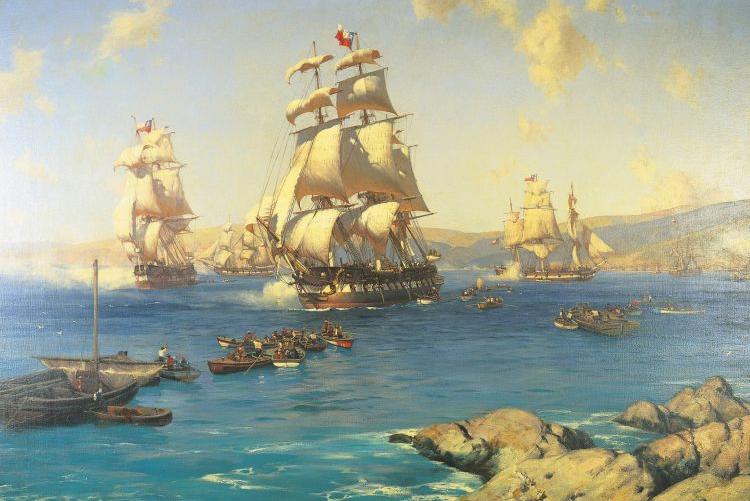
El San Francisco is typical of the many patrol ships in the Oronegrean navy
Almost from the start Oronegrean ships found themselves attacked, by hostile tribes on the rivers and by pirates along the coast. In response a series of ships were built to counter the threat. These included small vessels designed almost exclusively for use on shallow rivers and estuaries. These ships were often armed with only 2 light cannon or some swivel guns or no guns at all, relying on her crew to use their weapons to fight any foes they encountered.

The River going craft had shallow drafts to enable them to go in shallow waters or to land on beaches or river banks
Some threats however could not be dealt with by these small vessels. This was especially true along the coasts and shipping routes. Out here the river craft were, by design, less suitable and a different type of ship was needed. While a variety of naval ships could be used, such as frigates, cutters and sloops, it was decided that specially designed patrol shops would be made. These vessels were often armed with between 6-12 cannon and swivels. Not enough to take on other naval ships or larger pirate vessels but fire-power wasn't the focus.

Pirates were the main threat in these waters, but sometimes merchant ships would run into trouble and need assistance.
These ships were able to sail in quite rough seas, were fast and had shallow drafts (making them suitable for use on larger rivers). Although their primary task was to defend shipping lanes and coastal settlements they also served other roles. First amongst these was as search and rescue craft. Because of their speed they were sent out after storms to look for any survivors of wreaks, either clinging to floating debris or washed up on the coast. Another role was transporting important cargo securely. Quite often this meant that letters and parcels being sent during times of war were taken by these ships. In a similar vein high value individuals may also be transported. Such as officers being sent to or brought from the front lines.

Storms were deadly, sinking many ships. Oronegrean patrol ships looked for survivors often with little success.
These patrol ships operated in conjunction with the navy but were distinct from it. Often they were part of the Oronegrean Marines (which also operated in tandem with the navy.). This was because of the fact they were used for riverine and estuarine warfare which was considered the marines domain. This relationship wasn't permanent and the patrol ships were placed under the command of the navy and a distinct branch at others. It was this distinct branch - The coast guard - that would eventually become a permanent fixture of the Oronegrean state and carry on the legacy of the patrol ships until the current day.

Friday, January 22, 2016

Alberto and Sophia Castillo

Alberto and Sophia are the last members of the Castillo family to have their biography written, They are the second youngest son and eldest daughter respectively.
Sophia was born in 1719. Her childhood was a happy one and she spent many days reading down by the steam next to the family home. As she got older Sophia took to riding great distances in the cool Oronegrean evenings. It was on one of those evenings that she chanced upon a beautiful blue pebble in a stream bed. Upon returning home she asked her parents to encase the pebble in a golden case too keep as an amulet. It was this amulet that she wore to a local ball as a necklace when she turned 16. It was said that the son of a local aristocrat was so entranced by the pebble and Sophia's beauty that he asked her to dance with him. This caused quite a stir as it was expected for him to dance with the young ladies in attendance rather than the daughter of a merchant. 
It was soon after this that Sophia, possibly encouraged by her mother, started trying to court the young gentlemen of Oronegro. Although it was more common in Oronegro for someone of lower class to marry one above them it was still news when it happened.

Sophia out riding her horse, She doesn't wear her amulet most days for fear of losing it. She firmly believes that it once belonged to a queen of the indigenous peoples who lost it long ago. A local legend does support this idea although most are sceptical of this.
Although she has yet to marry she has caught the eye of many fine gentleman. And her mother tries her best to make sure that the finest match is made. Many suspect Maria's motives are securing her family a position within Oronegro's ruling elite. Whether or not Sophia shares her mothers motives is unknown and many do not care.  Most are just happy to see a young lady making her way in the world.

Clearly this ride is a short one, perhaps it is the heat or maybe she has an appointment to keep.
If his sister wants to be the glamorous aristocratic lady Alberto Castillo is most certainly not gentlemanly.  Born in 1714 he had a good childhood playing with his older brothers outdoors often exploring the woods around the family's property. As he got older he didn't take up a position within the family's trading business instead he went out hunting and drinking with his friends. This inevitably caused problems with his mother who had ambitious plans for expanding the family business that most definitely included him. So it was that in 1722 he moved out of the family home into a small hut on the edge of the forest. Although he would often visit his family he enjoyed his time away.

Here Alberto can be seen hunting. He appearts to have caught an Oronegrean short eared red hare.
Fishing, Hunting and Drinking take up considerable parts of his new life but he is not a fool. Although the black sheep in his mothers eyes he is respected by his brothers and is fiercely loyal to his family. Although unmarried he is known to have had (and probably has) multiple female companions. Considered a bit of a rouge he is not averse to danger and is a crack shot. What will become of his lifestyle is unknown but he's happy as he is and it doesn't look like he'll make a change any time soon.
Alberto returning to the shade of his hut to get out of he hot sun. Heat stroke it a very real problem in Oronegro's hottest months.
This concludes our biography of the Castillo family. Please refer to our expanding selection of biographies and histories to learn more about the people and events that make up the land of Oronegro.

Well that's all for the Castillo family. From now on I won't include dates for my Biographies this will enable more flexibility with dates. And it also removes Oronegro somewhat from our world in time just as Oronegro is somewhat removed in space through the use of a portal. Again this is all about flexibility it allows Oronegro to be 18th century without having to conform to all the realities of that period. I may include some dates for other things such as technological developments or conflicts.

Wednesday, January 6, 2016

Fernando and Maria Castillo

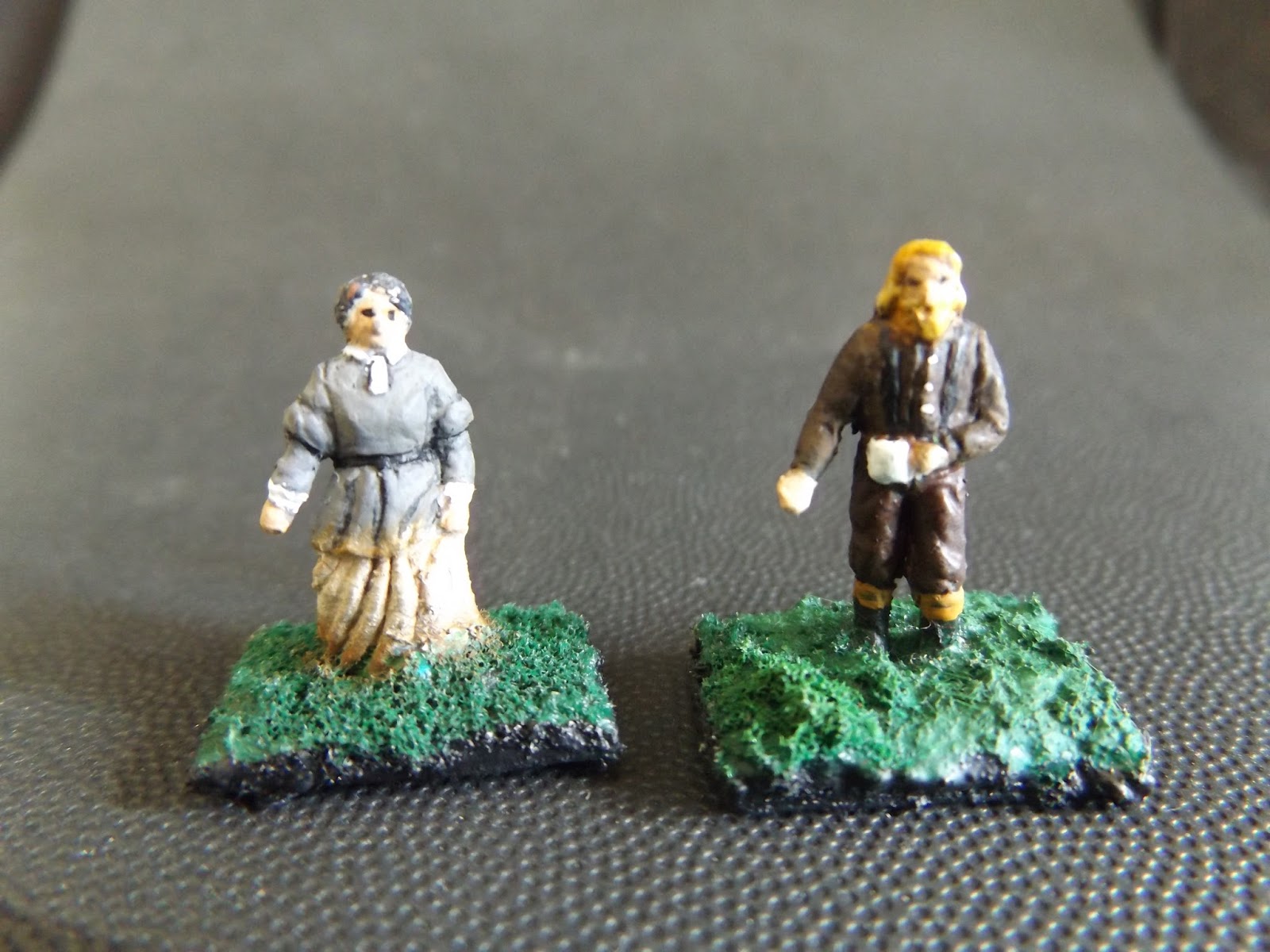
Maria Castillo is wife of Jose Castillo and mother of their six children: Fernando, Rolando, Sophia, Alberto, Rosa and Giorgio.
Mother and eldest son together. Fernando seems to have found himself a nice mug of coffee.
 Maria Castillo's age is unknown, nobody dared to ask her for it. What we do know is that her no-nonsense attitude and stubbornness was legendary. And although she may have seemed harsh at times she always took the best care of her children.
Maria likes to wear simple garb as it is less likely to get ruined in the rural areas of Oronegro. Fine clothing doesn't last long there.
 Despite her stuborness she also had a keen sense for trade and it was as much her effort as José's that their trading enterprise got off the ground. And it was thanks to her teaching that her second born Rolando gained the insight into trade and was able to take the family business from the local to national scale. Of her social life and other exploits we know little. She was quite conservative in that regard and kept as much information as possible to herself. No rival would be able to find her weakness and none ever did.
Although it may not seem like it Maria and the Castillo family are very well off. José's successful trading business.
 With his golden blond hair Fernando takes after his father. Also like his father he participates in the family business captaining one of the family's river boats up and down the Oronegro river and its tributaries. Born on the 6th of February 1709 he would become quite famed for his numerous romantic exploits much to the annoyance of his mother who had hoped to arrange a good marriage with a family of Oronegro's established upper classes.
Fernando with his coffee. Coffee being one of the commodities the Castillo's trade regularly.
 Although his still with trade was competent he was soon overshadowed by his younger brother Rolando. Despite some fear that this could cause a rift between them, the result was actually a strengthening of the bonds between them. Fernando who was always following his heart rather than his head felt glad that the family business would transfer into his brothers capable hands rather than his own. Although recent rumours that his brother may split and establish his own trading company have unnerved Fernando.
Fernando may well take over the family business if Rolando does decide to set up his own.
 Fernando and Maria are quite different in their attitudes but both love their family and will strive to do what is best for it.

well that's it for these two for now. We'll be hearing of them again in the future but for now work is going on to complete Fernando's other siblings.

As always good day/night. :-)

Saturday, August 2, 2014

Bunker Teck de-classified information

The Bunker in the heart of La Ley shall always be remembered for it's former occupants. NAZI scientists, dubious characters and greedy, power hungry individuals! These people commuted great atrocities, created horrific viruses, undertook unthinkable and immoral experiments on innocent people and made, sold and later used highly advanced weapons utilizing strange, rare and once thought simply fictitious compounds.

The Stuff of Science Fiction

Witnesses to the attacks by Bunker troops from the bunker agree that the technological superiority of their weaponry was absolute and that such technology only existed in "our times" in works of fiction! True these forces were repelled to the most part by troops armed with standard weapons however their use of what has popularly been called "Laser Rifles", force/energy shields, hover vehicles and "Star Fighters" meant that early on these forces were seen as not only unbeatable but also as invincible and unstoppable!

As would later become clear the Bunker was not alone in this fight. Allies came to it's aid from far and wide, and by far and wide beyond the earth and the solar system in some cases. The total number, of what came to be considered hyper-advanced forces (HAF), in Oronegro was never fully determined. Many, perhaps most left once the Oronegrean defence forces started to find ways to overcome the technological advantage and began to seize the initiative.

The fight back


At first the gains were made by Los Angeles Negros. Who were not afraid of taking on advanced forces and by taking the weapons of their fallen foes gained party in terms of small arms. Their superior training meant that with or without these weapons their speed, cunning and shear determination meant that the weapons and armour of their foes were only a hindrance.
Los Angeles Negros- the black angels
Later other forces began to put pressure of these advanced forces. The Soldiers for Earth's Defence - Los Soldados por la Protección del Mundo (SPM), a unit more secretive and almost and well trained as the Black Angels, inflicted catastrophic defeats on the HAF. This unit of the Oronegrean armed forces- Las Fuerzas Armadas de la Republica de Oronegro (FARO)- had been created during the cold war as part of a global initiative to provide the Earth with defence forces in case of alien invasion. (There was a fear that the detonation of the first nuclear bomb would attract unwanted inter-stellar attention). The SPM were well armed and armoured their weapons coming from the bunker itself.

Eventually standard forces gained the upper hand as the shock of the enemy wore off and news that they could be taken down spread.

Conclusion

At the end of the war the bunker and it's forces lay in ruins. The lead scientists were tried for war crimes and were sentenced to 200 year sentences (many being immortal or claiming to be). The Earth was again divided and much lay in ruins but after such fierce fighting people came together and started to rebuild. And although walls divided East and West once more it was both sides that put them up crying as they said goodbye to those on the other side.

What will come in the near future is unknown. With 2030 fast approaching the great upheaval of the 2020's is not going to heal any time soon but globally people are coming together renouncing war and forgetting boarders perhaps the walls will comedown once again to cheering crowds. One can only hope.

Tuesday, February 25, 2014

Life Before the civil war part 1

Oronegro was not always at war! although her soldiers, sailors, marines and airmen were always off somewhere causing trouble the nation itself often enjoyed long extended periods of peace.

In this text we shall explore Oronegro's slow collapse into ruin during the first decades of the 21st century. a time when booming business caused by the war on terror, civil wars and international conflicts between many nations (larger ones usually fought in "imagi-nations"). Oronegro's government was for several years controlled by the right wing Freedom Markets party, who controlled government by dubious but not undemocratic means. the system of MMP in Oronegro meant that many lesser parties joined this party so they could have influence. The Freedom Markets party (FMP) was on several occasions accused of bribing these lesser parties but no charges were ever laid. So it was that with business booming the welfare of ordinary Oronegreans was overlooked.

Because of the obvious reliance on Oronegro's economy of the arms and oil industries large sections of the population were employed here. Although nearly all the major companies were nationalised and attempts by the FMP to sell them off were blocked. So the FMP allowed these companies to be run on a stronger commercial basis, the basic working rights of the employees being ignored.

Now the FMP did not represent Oronegro's entire right wing many sections disagreed with what was going on, on the basis that Oronegrean values from the founding days; respect, family and decency, were being eroded. Although most of these were already in coalition with FMP and none seemed to object to the passing of the many bills that allowed for this exploitation. Oronegro's left and centre had similar problems, many parties there had also become part of the FMP's coalition (bribery suspected in nearly all cases). The central Democrats, Centre-Left Labour and Liberal parties the Left wing Socialist an Communist parties could have presented a formidable opposition and would have controlled government if they had formed a coalition however because of their differenced they never did. the right wing Mayoral Party did attempt to bring them together but the Communists and Democrats were not happy with the proposed plan.

Living and working conditions fell due to the FMP's corrupt and exploitive control over the national economy. Trade deals were made to places that nobody knew anything about every avenue for making money was exploited even trade with fanatical terrorist groups! Yes trade with terrorists was common but until then only "freedom fighting peoples" were sold anything, more fanatical groups got only small arms or nothing at all depending on how dangerous they were seen as.

the Bunker which would become so infamous during the civil war was used to create weapons (later seen during the civil war) for states outside the standard world. Laser, plasma, dark matter and even gamma weapons were apparently made and sold. to whom no details were kept. the records only showed business transactions, giving no details of where these places were just the names of the groups, their orders, some contact details and the profits... profits in BIG LETTERS!

Resentment at the exploitation began the process of radicalisation in the population! angry workers looked to far right and far left groups. Between 2015 and 2019 the Neo Nazi gangs trebled in size and the communists quadrupled in number. this radicalisation led to violence! And for the first time in over a hundred years sectarian violence shook the cities of Oronegro. Police quelled any serious events but everyone could see that the situation was becoming desperate.

Although not all of Oronegro suffered so much. the Autonomous Regions OF Greater Oronegro (AROGO) did slightly better, the exception being with The Former Lawless Territory where serious exploitation occurred. The more fortunate areas on the whole remained loyal to the government although this was usually because the Government took so little notice of them that they did what they wanted.

These divisions between the exploited regions and those left to their own devices matched almost entirely the divisions and boundaries at the beginning of the civil war.

This concludes our text.

Monday, November 4, 2013

Oronegro her territories and the colony of Ororussia (Kievalsk)

well after who knows how long this place is getting an update. one that is well overdue! I won't say to much but until now actual work on developing the story of Oronegro's territories has been slight to non-existant... in short I need to work on the stories. this will be done at a later date, perhaps (as most of the territories were aquired during the 18th century their stories will be developed though wargaming... anyway this post will have a little bit of history and an outline on the atual structure of the territory, their status and some 20th and 21st century facts... i.e their involment in the civil war.
anyway time to get into character and write the story.

 Below is a map of Oronegro in the 21st century, her adjoining territories and the neighbouring states.
(click for bigger picture) Oronegro is only part of a greater state made of of mostly autonimous states.
 "Oronegro is more powerful than can be considered comfortable" was what one British MP said in 1815 at which time Oronegro was at the height of her power. She threatened to become a serious empire and could have become a super power if things had remained stable internally. At this time Britain looked on crippled by Napoleon her forces were no match for Oronegro should the state wish to make any serious land grabs. Spain was no longer relevant and as her colonies began to throw off their shackles Oronegro which had as mayor a man who could claim to be descended from the old Spanish king! a possible heir.
as the rest of South America rebeled Oronegro did nothing. the Governments worst descicion.

As it was the Oronegreans did not go and seize control of Spain or as it was so feared try to force their way into the games of the big empires. Oronegro decided for some reason to remain loyal to the Spanish monarch, which would cause them great distress later on as the people of Oronegro began to demand freedom like their South American cousins were. A civil war errupted between the loyalists, those who were loyal to spain and the sepratists those who wanted independance. The civil war has been called the strangest war in history. Firstly as any historian of Oronegrean history knows the control of the great imperial powers on Oronegro was limited at its greatest extent. Secondly although the fighting was fierce and involved thousonds of people the Army, navy, Marines and other military forces of the state refused to get involved! There were some who, against orders left and got involved but the majority of the armed forces remained neutral, waiting, making sure the nation would not fall into splinter groups for other powers to gobble up. The war raged until 1821 when the loyalists finally gained the upper hand. The nation was crippled and only hung onto her territory thanks to the restraint of the military commanders who had lost both friends and family in a pointless civil war.
The Oronegrean civil war was not fought between powerful generals but radical civilian groups and dangerous militias.

However in the 1860's Spain called upon her remaining territories to force her control upon Oronegro. Spain was still very powerful many of her colonies, like Oronegro herself were shielded from the rebellions erupting around them by the portals which were the only access to them. the imagi-nations (the modern term for them) Spain controlled immediately responded all eager to help crush the most notorious and dangerous colony around. Oronegro weakened and worried called to Britain for support, Britian turned them down on the grounds that her own colonies were causing her enough trouble.
The was was short and saw Oronegro seriously battered. However, not even the most powerful of the forces sent against either Oronegro or her colonies were enough to over power her still excellent armed forces. Oronegro gained independence from Spain and all the other "traditional homelands" of the Oronegrean people. But the territories of Oronegro were angry and some wanted independance, the leadership of Oronegro then made a fateful descicion... independence through dependence. The Territories would govern themselves, raise their own armies, set tax and internal policy but every year a council would be held in La Ley to set the policy of the various states and territories. This union meant that if Oronegro went to war the territories went too, if the territories were invaded Oronegro and the rest would go to their aid. It was a union that meant later on the territories and Oronegro would be so close that they'd be considered a single nation once more.
This was true for the territories of Oronegro but there was a colony Kievalsk, Ororussia that stood out.

KIEVALSK - ORORUSSIA
When this land was accidentially 'discovered' by 'the dumb merchant' in the 17th century it was considered a mistake... how can one said across the Atlantic and hit Eastern Europe without passing through the straits of Gibralter? well one captain did! Sailing from the desert city of Granada in Oronegro's most southern territorial claim he sailed north east expecting to pass through the portal and to reach europe in record time (instead of taking the long route up the coast then eastwards)


Ororussia also known as Kievalsk was discorvered accidentally but colonised and conquered with vigor!
Well he missed the portal (somehow, its still debated how he could have managed it as if he had gone directly NE or NNE as was the most sensible route he should have passed through it) and came to Kievalsk. it's position is hard to explain as maps of the neo atlantic confusing as the many parrallel worlds and portals mean that a land mass considered part of the map may actually be part of a different parrallel world. Anyway after managing to get into the Verosk sea the captain landed at a small fishing village, later renamed El Descubrimiento. The Colony of Ororussia was to become an important part of Oronegrean history, it's violent conquest in the later 18th century and the struggle to retain it in the 19th would give the land a reputation. Naturally more shall be discussed in the artical on Kievask/Ororussia but when other territories of Oronegro were given independence through dependance Ororussia was given more colonial guards and a tighter grip established on it.... oh and a puppet government to keep everyone happy.
Oronegrean soldiers acting as firefighters in Ororussia
during the 20th century Communism spread down from Russia into the colony Oronegro had lightened her hand on the colony but would not allow it to fall to the Soviet Union, a fierce and secret war took place which started in 1918 but ended in 1936 when the Soviet Union threatened a full scale invation if Oronegro did not co-operate... this co-operation was the start of a long slippery slide towards the situation that Oronegro would find herself in when the superpowers fought for supremacy during the third world war of the 2020's. Ororussia would be crutial in the Oronegrean war effort to prevent the Russians from gaining the upperhand back in the homeland. Special forces sneaking out of the Colony would disrupt Soviet acivity not only in their lands beyond the great Siberian and Ural Portals but also in the "real world". This all ended and Ororussia asked for peace and aid when a new, unkown and deadly enemy sprang up in her own territory one which threatened not only Ororussia and Oronegro but Russia and the other superpowers as well!
it was to start in a small base on the mountainous island of Nadeyask
well thats the end of that then... it took me a while to write. Getting that final picture was a nightmare, it is ridiculously hard to get a good image of a mountain base... so a huge thanks to David for his model there... not the best post on the sight but its a start... and finally perhaps the boarders of Oronegro have been defined.

Thursday, May 16, 2013

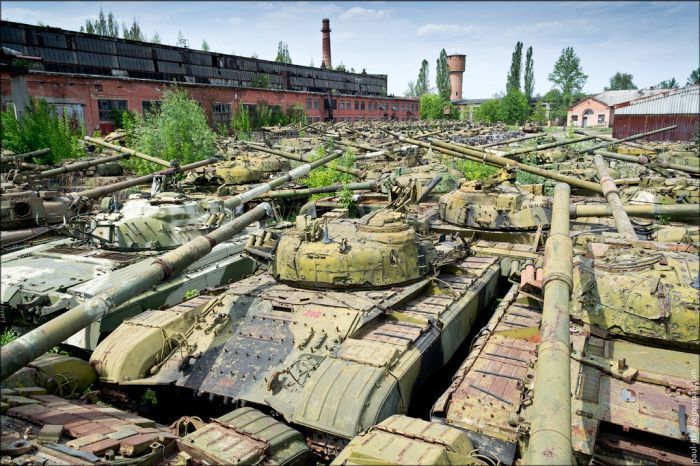
Russian tanks - Rebel Factories

"If it should fall into the wrong hands..." a cliché! but one we are all familiar with. used when there is a piece of technology, an idea, or an object that is so important that if the wrong people should be able to get it... well cancel all your plans! your going to need new ones!
a T-90O changed everything! now the Soviet Union had a tank just as capable as those of Western powers
But that is exactly what Happened. Oronegro's civil war had some unseen effects on the rest of the world. Before the War Russia/The Soviet Union did not have tanks of the same quality as the West. They lacked the technology and the knowledge behind it. But the rebels had taken over the factories where some of these western tanks were made, they had the plans, the materials and even worse they all knew themselves how to put it all together.
the old Soviet tanks were numerous but not effective

So when the Soviet Union's armies aided the Rebel cause Russian tanks went to these factories to get repaired. at first the rebels just patched the holes and sent them on their way but then one group decided that repairs were not good enough! When the Russians sent in one of their tanks (exact date unknown) in 2023 for repairs they were concerned when they did not get it back within a few weeks. But then suddenly 3 months later a tank was apparently ready to pick up. Curious the Russians went en-mass, the whole thing turned from a normal pick up into a ceremony! out of the factory doors to the astonishment of the Russians who were there rolled a blue, quiet T-90 Tank. It may have been a let down if another tank from across the square had not shot the blue beast. The blast was huge! many of the Russians ducked for cover. but as the dust and smoke cleared the Blue tank carried on rolling, its armour dented but not broken, the other tanks crew promptly got out, asked the Russians to stand well back and Boom! the Blue tank made the other disappear! this was caught on camera by a drone but at first it appeared to be nothing. Only later was its significance known.
a game changer! but one that came from an unlikely source
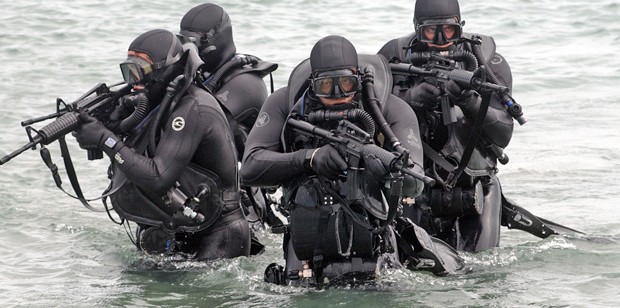
The tank was soon just one of many! blue T-90's and other Russian AFV's were rolling off the production line! their armour was strong, their guns accurate, they were a match for the western tanks that had seemed so superior just months before! the Oronegrean government panicked! then the Pentagon! Until all of the western world was in fear! Russia must not be able to produce these! the USA committed some its best special forces, teams of US Navy Seals to destroy the factory, assassinate anyone who held knowledge on how to produce these tanks and recover any plans of these tanks they could, the rest they would destroy!
the best of the best! but could they stop the Factories now?
Seal Teams were joined by Oronegro's own Black Angels they were about to carry out their mission when some news reached them that made them change all their plans. it had fallen into the wrong hands!!! Spetnaz operators had sneaked out plans as well as some vehicles on an advanced Oronegrean submarine, which they had captured. How they had done this unnoticed was a shock, how they got hold of one of Oronegro's best warships was another! How did they get the vehicles in? how did they not get detected?
they had got away! How? unknown. Why? scarily obvious

But it was irrelevant now! The mission was a failure, even before it was started. But Now Russia was ready, tanks of her own equal to that of her foes! Now all Russia needed to do was what Russia did best... make hundreds of them!
the war machines that changed it all


Wednesday, February 27, 2013

The story of Oroblanco

Oroblanco, white gold, is a story both sad and inspiring. her name has gone down in Oronegrean history as the thorn in the side, the great annoyance and yet it too had a story to tell it too was a proud nation once.

"Los gemelos del oro" The twins of gold! that's what Oronegro and Oroblanco started out as. Early on there was little division in fact during the time of Centurion Fran and Centurion Ray the two were almost a single nation. during the 1580's and 1590's the two nations had to rely on each other to survive. San Fran, named after the Centurion, is actually built inside Oroblanco even though it was perceived to be Oronegrean, even at the time.
The problem was the two nations were to become estranged, as Oronegro grew and discovered gold the gold in Oroblanco went from abundant to scarce as the deposits to richly exploited a century early, creating the fortune of La Fortuna began to dry up. the 17th century turned the twins into foes San Fran was more than once the scene of riots as Oronegreans demanded it become part of their nation. As Oronegro grew Oroblanco grew also though in jealousy not power and in anger not wealth. Suddenly in 1681, when Samuel Jose the future mayor of Oronegro fought and won a great campaign in the valley of the cat, Oroblanco broke its alliance to Oronegro, and was almost about to cut off trade and diplomatic links when the news of how far Samuel had gone to make sure his victory was complete shocked them into rethinking their actions.
the centre of La Fortuna. it was here that the great central park that Oroblanco almost declared war on Oronegro in 1681

Yet it should perhaps not come as a surprise that the two nations would split Oroblanco was a conquistador settlement built on the hunt for gold and the conversion of native tribes, Oronegro was a refuge for the outcasts of Europe with strong principals which made it unattractive for both wealth seekers and those on a mission to save the souls of native peoples. it was unfortunate for Oroblanco that in reality Europe was full of outcasts and that in time it would be wars there between the great nations and not those in Oroblanco between natives and settlers that you'd see the influx of settlers to these lands and of coarse Oronegro not Oroblanco was ready to house them. When in 1689 Samuel Jose was elected to become Mayor of La Ley, effective ruler of Oronegro, Oroblanco tried to restore some of its former friendship but Jose remembered how they had almost declared war because of his campaign and still felt that the leadership in Oroblanco had some personal dislike of him, so it was no surprise that Jose did not negotiate with them.

Yet its was Jose, the man who almost caused war between Oroblanco and Oronegro in the 1680's who would actually lead Oronegro in a war against Oroblanco in the 1690's! after the great and famous campaign in the valley of Grasdamm Oronegro found that nearly all its neighbours hated it, Oroblanco was no exception! Oroblanco watched on as Oronegro went off to fight its own private war for its own private gain when Spain her mother was suffering in her fight against the French! who they noted made up a large part of Oronegro's society. as soon as the troops returned and the news of the victory spread Oroblanco, along with that other sibling of Oronegro, Playalargo joined with the other regional powers, Nouveau Paris, New Dunedin and Costa Plata.
They thought that Oronegro was far weaker than she made out, they thought such a mixed society could never hold together under the strains of a campaign, they thought that Oronegro could never fight them one by one... They were wrong!
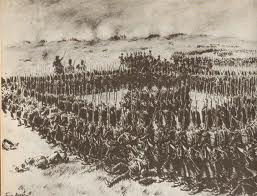
Oroblancotine squares prepare for a possible attack on La Fortuna the fires on the distance are of the villages raided by the Oronegrean Cavalry.

Mayor Samuel was a military Genius he knew the council of La Fortuna very well, he knew the old aristocrats would never be able to fight a co-ordinated campaign with the other nations. So he didn't give them a chance to even try, he sent in the 16 most elite Cavalry regiments in Oronegro to deal with La Fortuna. they ravaged the country side. on the First day Alone they covered an area of about 50 hectares burning all the crops, destroying farms and raiding villages. on the second day the army of Oroblanco formed up in squares each of 200 men, 50 squares around La Fortuna expecting the cavalry to try and attack the capital, but by mid day it was clear the cavalry was not coming. so the army split into small groups trying to find the Oronegreans. every village they came to was burnt, every time some one said they had seen a large groups of horsemen, it was to late to catch them. Some of the Oroblancotine units did find the cavalry but for them it was not a success but rather a nightmare. the 4th Dragoon regiment along with the 1st and 15th line infantry regiments found themselves surrounded by cavalry although they formed into a giant square the Oronegreans formed a great wheel around it pistols were shot into the square and every so often a cavalry officer would jump from his horse faking death so that he could take a well aimed shot or two at the infantries officers... The battle looked like it could last the rest of the day when the 3rd lancers from the Great Farming plain suddenly dismounted and attacked at one of the squares corners the attack was so unexpected and so unorthodox that the soldiers there almost forgot to fire thinking that the lancers were mad, unfortunately it was a simple distraction as while they concentrated their fire on the lancers charging with their spears they missed the cuirassiers suddenly brake from the wheel and attack the corner also. The square broke as the wheel turned into a charge all the cavalry focused on this one corner. the Oroblancotine Dragoons mounted and fled as did many of the infantry on the other side of the square. The fighting didn't last long, the general of the Oroblancotine forces sat down in the centre of the battlefield and waited he knew he had lost he just hoped that his men would realise it to and give up.
the general sits knowing defeats certain as the sun sets the battle concludes the last surrounded soldiers of Oroblanco surrender to the victorious cavalry.
One the third day rumours of an infantry force approaching La Fortuna caused the government to surrender! The war was over, but although Oronegro had one many soldiers from Oroblanco fought on and joined rebel groups, some more organised and other simply bandits. From then on Oroblanco became the thorn in the side a nation that was no longer existent and yet still able to cause havoc!
Oroblancotine Grenadier rebels fight back against the Oronegrean occupying forces.
Well there you go a little story of one of Oronegro's neighbours, I really hope you like these little guys as I really am going to make them look bad from here on in... of coarse I have to... I would not be making Oronegro seem like a good place if I did not and as I am pretending to be some sort of Oronegrean historian I need to keep in character for this blog... which is why the following is odd. recognition of my followers.

Greetings to the new followers of the Oronegro blog... no I did not forget about you I just have been thinking how I could recognise your kindness in following without compromising the blogs theme, in the end I just thought that it was pointless to keep up the theme to much and just say Hello!
Hello to Remco de Groot from remco's miniatures
greetings to Tankmodels.Pl from tankmodels.pl
Hi Francis Lee from the angry lurker
welcome Ben B from bens soldiers
Hello once more Peter from peters cave
good to see you again Abdul666 from mcristo by lacew
Hi Steve from sound officers call
Hey Aaron welcome to the blog... a link to your profile... multiple blogs like myself
greetings to Michael Peterson from multiple places to again a link to your profile
And last but not least Anne O'Leary nice to have you here at the Oronegro blog... and of coarse a link to your blog at Anne's Attic

welcome to the blog guys... I hope you like the story of Oronegro, or as is the case in this post of some of her neighbours.

Saturday, February 16, 2013

Rolando and Giorgio

Rolando and Giorgio are some of Jose and Maria Castillo's children; both take after their mother and have dark hair, unlike Rosa, Sophia and Fernando who take after Jose and have light hair, Alberto has a dirty brown hair colour half way between his parents.

a small family gathering without the evil mother or the crazy siblings who are out and about.

Rolando is the second oldest son of Jose and Maria, he is an excellent business man who has taken the modest trading company of his father and turned it into a national organisation with a large annual profit. Although he is not yet in control is seems highly likely that he'll take control of the family business when his father resigns, though it is rumoured that he might even set up his own as he clearly has the potential. Born on the 28th of April 1711 he was different from other children in his youth, he showed a high intellect and a great mathematical ability but he was incredibly quiet and withdrawn. However at the age of 15 he started to show some vague social skills, much to the delight of his father who feared his son could never marry even if it was arranged. though Rolando has never had a relationship like those of his elder brother, but this is to his advantage as the calculating man, as he is known, knows the value of a high born wife. Something he may soon have if he can seduce of of the many pretty women of Oronegro. Though the question remains is his desire for marriage part of some equation that places a value or number on love or some true feeling in his heart?

Rolando on the right and Giorgio on the left

Giorgio on the other hand is a very happy child, he may live in the shadow of his sister but this is to his advantage as then he can avoid his mothers strict eyes. Rolando is her favourite son which may sound good for him but all that means he, like is father, does every thing he's told is easy to love. Giorgio is not like that, he doesn't matter to her because he was born after Rosa so can never compare. Most children would be permanently damaged by the lack of love, but when your mother it "el Burro" its different. Her nickname perhaps shows more about her character by the fact she's referred to as male rather than as a donkey. For this reason Giorgio is fortunate he can stay at his friends house without the threat of his mother breaking down the door and dragging him away for dinner. Giorgio was born on the 31st of August 1729 during what was a pretty average day which Maria saw a a disappointment but his farther was relieved that he didn't get rushed along by flood waters like the year before.

the family really should consider getting a better artist to do their paintings

all in all they both live very different lives and the wars of the 1730's and 1740's will be a large part of their lives.

Friday, February 15, 2013

the Oronegrean Song of war (english version)

This song is the English version of Oronegro's war song which is sung during the long marches to war. The Spanish version is not a direct translation as the versions are all sung to different tunes and created by different units. The English version was written by La Ley's British cohort which is one of the few units of el ejercito segundo which is permanent and ready to be deployed at a moments notice. They are mostly light infantry though they do include some policing forces and engineers. This is their song which after a few decades of being sung only by that unit spread to the whole army!

Come my sisters, my brothers , my sons.
we're off to war and the sound of the guns
with courage we go
though death may show
his fear is weak and weak his blows

Come my sisters, my brothers, my sons
we're off to war and the sound of the guns
our spirits are high
though some may die
to their honour let the remainder cry

Come my sisters, my bothers, my sons 
we're off to war and the sound of the guns!
though peace we seek
and victory desire!
let us not fail to fire

come my sisters, my bothers, my sons
we're off to war and the sound of the guns!
to the battle we go the fight and the foe
forget not our cause and forget not our home
for Oronegro we fight;
for Oronegro our home!

come my sisters, my brothers, my sons
though the guns may sound 
our courage will be found.

Because of this song it is said that the young Eduardo Martínez would be inspired to lead his own armies, he is quoted as saying. "as I watched the forces move silently out of the city I could not help but hear a growing sound moving towards the mound on which I stood. as it came so could the drums be heard the flute, and horn played in time to the rhythmic march, the song that was sang certainly not a piece to be found in any Opera, our of time with the beat in many places, yet it is true that all the men and women spoke as one. I looked to General Marco d'Amarillo y Natillas who stood to my right and asked him how long it would take to reform the Mayoral Cuirassiers. he said  two months at least should we use horsemen already in service or years if we were to train some especially. I answered that I wanted them ready and armed as soon as the army reached the mouth of the La Esperanza some and that I myself would be amongst them."

and so it was that the Story of Eduardo Martínez, child and warrior mayor comes into the story of the great Oronegrean war of defence, conquest and survival.


Thursday, February 7, 2013

Rosa and her father Jose Castillo

Rosa daughter of Jose and Maria Castillo was born on the 5th of October 1728. The day of her birth in El Pollo where she was born would become know as la Gargantua Del Rio, the throat of the river! For on that day the river surrounding the island part of El Pollo was so high that it almost completely swallowed up the settlement and her birth was to become a story of great renown!

"the cries of a new born child were heard over the roar of the waters and the screams of the drowning! 
All those forced onto the roof tops froze in that brief moment and as if hearing the anguish the river found mercy in its destructive heart and retreated back to its channel leaving behind those it had so cruelly taken.
The cries ended and slowly life returned and the priest could be heard muttering 'an angel, an angel!'"


Her father Jose was perhaps the most amazed by the event, kept away from his family by the raging currents he could not have swam to them from the town hall. yet just before he thought we would miss the birth of his fourth child the balcony upon which he stood collapsed, the cold water dragged him along but when all seemed lost a hand from nowhere grabbed him and pulled him from deaths grip, to the shock of all as well as himself he had made it to the family home and not more than half an hour later his daughter was born.
Jose goes to ask his daughter what the matter is, she has not come down for dinner and Maria is getting into one of her grumpy moods
Rosa shows her father the cupboard in which she is certain that mice are hiding.
Perhaps then it was surprising that although many people begged that the child's name be things such as Diosa (goddess), her mother, Maria is perhaps better known as burro (donkey) because of her stubbornness and as such her decision to call her daughter Rosa stuck. It was only when at the age of 4 when she stared to go out more into town with her older brothers that she started getting called Diosa, and although officially she was not called that by anyone, it appeared that there was some sort of identical twin running around with that name... at least that's what it seemed like when Maria went out with her daughter

father and daughter pose for a portrait
unfortunately the painter has to paint them from behind for some reason?
The Castillo family are quite well off, not only because Rosa received money and gifts from nearly everyone on the town as gratitude for her miracle! they are quite a large family also, Rosa has a younger brother Giorgio who is always seen in the Shadow of his sister.Fernando is the eldest child, his long blond beard and hair make his somewhat barbaric, he is however very protective of his little sisters. Rolando is the second oldest and most respectable so far as the aristocracy sees things, most likely to follow his father in looking after the families trade business he is also a visionary planner. Alberto is the second youngest son, he is totally unlike Rolando and spends his days hunting with his friends. Sophia is the eldest girl, she is unmarried and is known throughout the great farming plains and the El Pollo region as the fairest woman with an incredible intellect. they are a moderately wealthy family but the trade business has boomed and some of the family, like Sophia are looking to marry into the rich and powerful families in Oronegro.

Friday, January 25, 2013

Captain and commander Alfred Hale

this post and the figure/ character featured within it are dedicated to Alfred Hale the late husband of Anne O'Leary. I quote her in saying "my departed husband who was a sailor and a deep sea welder. He was killed while working on a rig in an explosion over 25 years ago. He was a good man and I miss him still." Anne when you told me this story I knew that I must name this figure after him as you asked me. I hope that it honors the memory of your departed husband and that perhaps he wherever he is now feels that this respects his memory.

Captain and commander Alfred Hale is a man to whom all others is the symbol of bravery and honour. In Battle on land and sea he wears plate armour that both makes him a target to his foes and a striking symbol of leadership to his comrades!
born on 27th of June 1705 to a middle class family from the beginning he showed himself to be greater than most of his classmates in school. Strong and brave he soon was selected by his peers for a leading role in his school. in April 1721 he was recruited into the military after a fight in one of San Fran's many bars. Yet although he had not been trained for very long he soon showed a great knowledge for military and naval matters. in the great pirate raid of 1725 he showed perhaps the greatest courage and discipline when the commander of the company was in was slain and all the NCO's refused to lead the unit. Alfred took control of the remnants of the force which now only numbered some 13 men. It was in that moment he first wore that iconic suit of plate steel, taking it from a mannequin in the great house where they were cornered. There in that place they fought for 3 hours cut off from help facing waves of foes who surly outnumbered them 20 to 1.
Help came in the form of some marines who came up from the river, their ship had been taken now and they sought refuge in the large house where Hale was fighting for his life his force now reduced to only 6 brave men. However as soon as the marines shot, bayoneted and slashed their way through the building Hale took command of them and lead them out of the building and charged them down the streets of La Ley's old district and with the retaking of marines ship his legend was made!

For him the rewards and honours came thick and fast He was promoted to the rank of commander which meant he could lead a half century of soldiers (50 men and 10 officers) and granted the honour of also being a naval captain which was un-heard of for a man from the army. Though perhaps he was not rewarded enough for his actions there was one thing that he was given that other men could only dream of: A purpose built boat, HMS Anne!
He wrote in 1728:
"To my loving wife to whom I owe a great deal

Do you remember my dear that day 3 years ago, it seems like an age now. However after that nasty incident I had recently it came back to the forefront of my mind. Remember the carpenters at the shipwright were shocked when I asked for our dear Anne. They thought I would ask for a large frigate or something, they do not understand that I am no simple leader, I do not like others to wait in a cabin or upon a hill watching the action from afar. I am a man of action, and my dear although you probably tire greatly when you hear me say it I must say once more, I always will be there in the thick of the fray where musket balls fly and bayonets flash and the smoke and the blood is mixed into one great cloud that covers the land hiding the horrendous sight of men killing men from any onlooker. Well my dear I shall gladly be back home soon, how's the maid I heard she was up to no good? 

to my dearest and most loving wife
Alfred"

The incident he refers to in his letter is none other that the Battle of  Petrablanca which took place on the 30th and 31st of March 1728. The Anne and the Gato were sailing down a small river near El Pollo when they came under fire from a battery on the bank! The Gato was sunk and Anne was damaged on her starboard side. Anne's gunners fought bravely but it was clear that they needed to take her out of range or out of sight of the guns and march over land to destroy it! The next morning Hale lead his 2 infantry men and some of his sailors along the road they met up with many scared villagers who spoke of a raiding bandit party that had come from the south. Hale brought many of the villagers and local farmers to a near by supply post where they came under attack. mounting the rood of the building the morning sun reflected of his steel helmet. Lord Alfonso Caballero wrote "the man was mad, mad I say for all the bullets I heard were surly aimed at him and yet he stood firm guiding the fire from the top of the building upon the enemies best shots." Alfred has hit several times that day but many shots did not penetrate his armour saving his life for sure. The battle was won when reservists marched up from El Pollo alerted to what was going on the previous days by the survivors from the sunk el Gato. The bandits fled rather than face the century coming up from the town. The bandits were well armed for a bunch of rouges and it was discovered by Alfred Hale himself that they were from south on La Fortuna in the remnants of what was once the nation of Oroblanco.

Alfred Hale on Anne's port side as she turned to fire on the battery.

the Anne sailing through fog
the defence of the supply house the next day


Without fear Hale mounted the top of the building to direct the fire of the infantry
Alfred Hale was in 1730 Granted a knighthood by the representative of the multiple monarchs of Oronegro, for his gallantry in battle and his help in restoring order to the nation of Oronegro. he currently resides in a respectable dwelling outside of San Fran where he is head of the police force. His boat the HMS Anne is usually in port at Rio Pescado north or San Fran. However as all in Oronegro begin to realise that our nation is once more about to go through a time of war the question arises "what role will Sir Alfred Hale play in the coming conflict?" perhaps we shall know soon enough for in this year 1735 after a break down with the respectable Lord McDonald of New Dunedin and his Allies in Nouveau Paris Oronegro is once more at war with her neighbours.